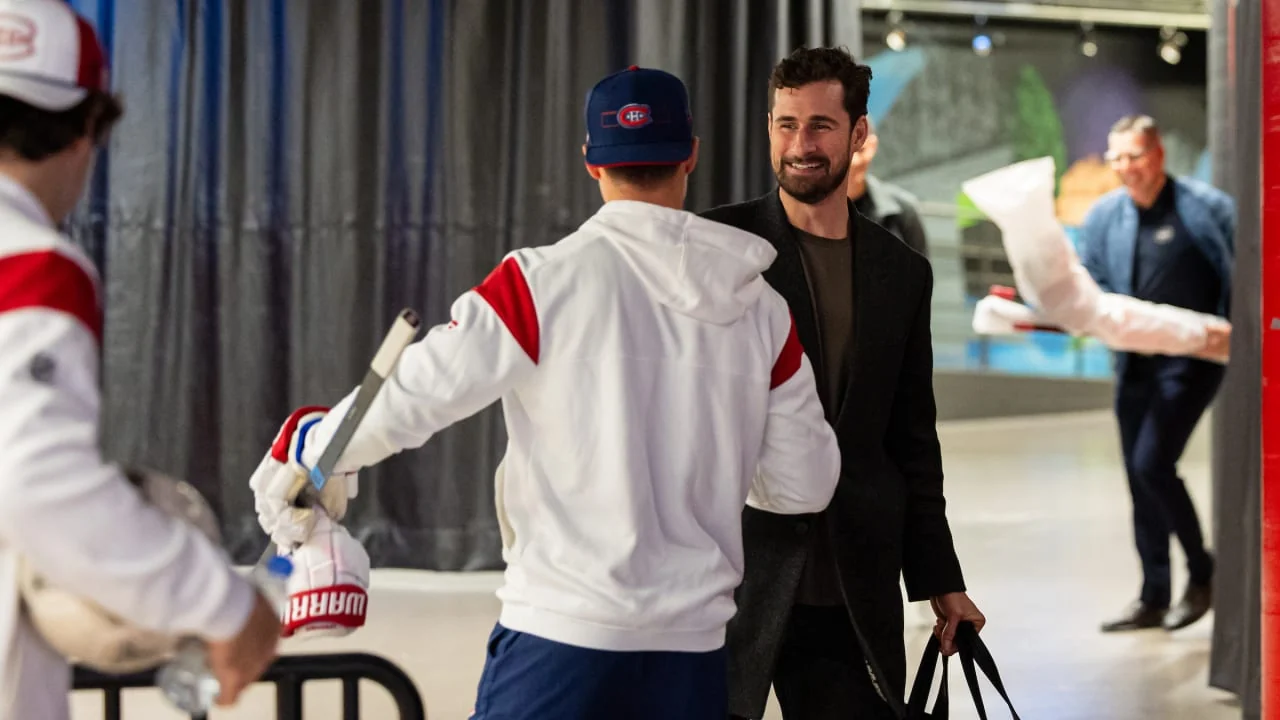
Dylan Larkin wears No. 89 for Montreal after the trade from Detroit, joining No. 14 Nick Suzuki among the Canadiens’ centers. The NHL’s November 25, 2026 roster snapshot lists 16 forwards, eight defensemen, and two goaltenders. That is a guide to the players and their sweaters, with game-day availability recorded separately. In Larkin’s first game as a Canadien, he earned a secondary assist on Alex Newhook’s goal against the Kings. The event record also shows when he skated alongside Newhook and Alexandre Texier.
Use the roster below to identify a player, then look at one dated game to find how the coaching staff actually used him. A forward’s listed position, his even-strength linemates, and his power-play work each answer a different question. The defensive and goalie examples likewise show when a practice report is enough to identify a candidate and when the official playing roster or final box score gives the stronger answer.
The Canadiens roster and jersey numbers after the Larkin trade
Start with the number that changed after the trade. Dylan Larkin is No. 89 with Montreal and the league roster lists him at center. Nick Suzuki remains No. 14. That gives Canadiens fans two different numbers to track through the middle of the ice, whether they are following the official game report or waiting for the nameplate to come into focus on a broadcast. Montreal’s September opening announcement is useful when looking back to the start of the season, while the current league roster supplies the November numbers. Canadiens roster · Opening roster release
As checked on November 25, 2026, the NHL’s Montreal roster entry and its 2026–27 entry matched. They listed 16 forwards, eight defensemen, and two goaltenders. Some listed players may be injured or unavailable. The snapshot is a sweater-number reference for this point in the season, and the official reports for each matchup establish who dressed. The order below follows jersey numbers within position groups. A forward’s listed position also describes a roster label, so you can see a listed center take shifts on the wing depending on the team’s needs. NHL roster data
Forwards: 13 Cole Caufield, 14 Nick Suzuki, 15 Alex Newhook, 17 Josh Anderson, 20 Juraj Slafkovský, 22 Chris Kreider, 24 Phillip Danault, 37 Brett Berard, 62 Owen Beck, 63 Florian Xhekaj, 71 Jake Evans, 76 Zachary Bolduc, 85 Alexandre Texier, 89 Dylan Larkin, 91 Oliver Kapanen, and 93 Ivan Demidov.
Defensemen: 8 Mike Matheson, 21 Kaiden Guhle, 42 Adam Engstrom, 45 Alexandre Carrier, 48 Lane Hutson, 53 Noah Dobson, 64 David Reinbacher, and 72 Arber Xhekaj.
Goaltenders: 32 Jacob Fowler and 75 Jakub Dobeš.
The numbers matter when two similar names appear on the ice. Florian Xhekaj wears No. 63 as a forward and Arber Xhekaj wears No. 72 on defense. The distinction helps if a broadcast mentions the surname before the next shift shows which one is on the ice. Two defensemen with first names that may be unfamiliar to a casual viewer can be separated the same way. Reinbacher has No. 64, while Engstrom has No. 42. Match the number to the game report when deciding who has moved up a pair or taken extra shifts.
The roster now reflects the Larkin deal and recent transactions, but the time of your reference matters. Montreal’s personnel page lists an assignment to Laval for Berard and Reinbacher and a later recall. The window between those two announcements answers a different question from the current roster. If you are studying an earlier game to see how a lineup changed, keep its date attached to every name and number you write down. Canadiens personnel moves
A number also tells you which shifts to follow without turning every stoppage into a lineup check. Watch a player at the opening faceoff, after a television timeout, and at the start of the next period. A sweater number is steady within the game, while teammates can change after special teams or a long defensive shift. Those are useful observations to carry into the discussion of Larkin’s first night.
What Larkin’s first game told us about the forward lines
Montreal’s new center arrived in a deal that sent Kirby Dach, Samuel Montembeault, Michael Hage’s rights, and draft capital to Detroit. The trade affected more than the top of the forward chart. Dach came out of the forward mix and Montembeault moved out of the goaltending group. The roster question after the announcement was which players would benefit from Larkin’s availability and where the club would use him in different situations. His debut gives us a documented answer for one game at Bell Centre. Canadiens trade release
In the November 23 game, Los Angeles won 2–1. Larkin played 19:57 across all situations, including 16:51 at even strength and 3:06 on the power play. He put three shots on goal and won 10 of 17 faceoffs. That volume tells us he played a substantial role during a tight game, including special-teams time, even though he had been away from NHL game action since October 26. The event summary also shows no shorthanded time for him that night. Keep those game-specific labels when comparing his role to Suzuki’s or to his first games on the road. League event summary · NHL game recap
The first Montreal combinations
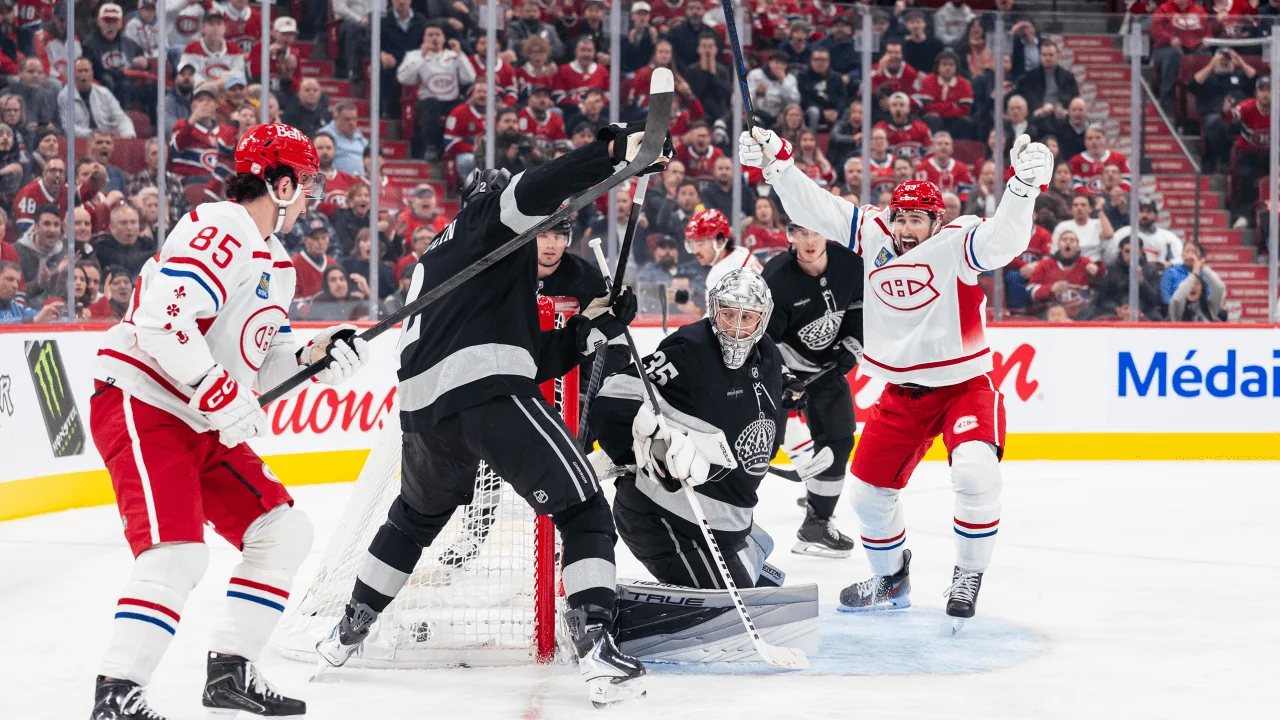
The official log places Suzuki at the opening faceoff and Larkin at a defensive-zone draw 18 seconds into the first period. That early order gives two identifiable assignments, even before you count total ice time. Larkin’s defensive-zone draw in the second period provides a useful closer look. At 6:58 elapsed he won a draw with Alexandre Texier and Alex Newhook on the ice. At 7:28 the same three forwards were out for Newhook’s tying goal, assisted by Texier and Larkin. League play-by-play
The NHL recap describes Larkin’s check on Brian Dumoulin helping Montreal recover the puck behind the goal line. Texier supplied the pass and Newhook finished near the crease. The useful detail is the sequence of jobs. One forward helped disrupt possession, one moved the puck out from below the goal line, and one found an immediate shooting window. It is a better picture of the line’s first result than simply saying all three appeared on the scoresheet. NHL account of the tying goal
Watch for the combination at a later game’s first few five-on-five shifts, after a penalty expires, and when the Canadiens need a goal in the third period. A group deployed together on a power play can be entirely different from the regular even-strength grouping. Writing down the game situation alongside the numbers gives you an honest sample of what carried over from the debut. If the names beside Larkin change, it might tell you more about the situation or an unavailable winger than about his overall standing in the lineup.
Reading Montreal’s defensive pairs and goaltending depth
The workload from the Kings game gives a clearer picture of the defense than the order of the names on a roster page. Lane Hutson logged 29:31 and Noah Dobson played 21:39. Kaiden Guhle and Alexandre Carrier played 18:51 and 17:46, while Adam Engstrom played 14:03 and Arber Xhekaj played 12:38. Those totals cover all situations. Time on the power play, penalty kill, or an extra shift chasing a goal can change each player’s overall total, so it does not establish how long any two played together. November 23 NHL Gamecenter
The play-by-play supplies examples of combinations rather than a tidy depth chart. Guhle and Dobson were on the ice for Newhook’s second-period equalizer. Engstrom and Arber Xhekaj appeared together earlier in that period. A short run of events can identify who was on the ice for a particular sequence. A stronger pairing claim needs repeated shared shifts or a source describing the full lineup. On a broadcast, note the two defensemen taking the first faceoff after each intermission and the pair staying out after a penalty. Those observations put total minutes in context as you follow the road trip. November 23 official play log
Dobeš started for Montreal and stopped 20 of 22 shots. Fowler dressed as the other goalie and logged no minutes. The distinction matters now that Montembeault has left. A playing roster can list both goalies, but the box score identifies who started and what happened after the opening faceoff. The Kings recap also describes Montreal pulling Dobeš for an additional attacker late in the third while it had a power play. A missing stretch of goalie minutes can reflect a team playing with an empty net, for which the event record supplies context. Official playing roster · NHL Kings game recap
How to read the scratches and recalls
Montreal recalled forward Brett Berard and defenseman David Reinbacher from Laval on November 24 and said both would travel to Colorado, Las Vegas, and Utah. Berard had averaged 7:18 across three Montreal games after his November 16 recall. Reinbacher registered two shots and played 10:50 against Philadelphia on November 21 after his November 15 recall. Those details tell you that the trip included two players with recent minutes and that their roles are at different positions. The later recall made each available to the club for the trip, and a game-day lineup still determines who dresses. Montreal’s November 24 transactions
The November 24 practice report says both recalled players took part. It also says Ivan Demidov joined the group briefly after skating on his own. Martin St-Louis indicated that Demidov could join the team later on the trip but would not fly with the group to Colorado that afternoon. Read those statements as their own updates. Participating in a portion of a practice, traveling with the group, and dressing for a game answer three different availability questions. A lineup that lists a scratch provides the game-specific status. The team’s report can add context when the absence stems from injury or another confirmed reason. Montreal’s November 24 practice report
How to verify the next Canadiens lineup
Start with the Canadiens schedule and match the date, opponent, and venue. At this snapshot, Montreal’s November 24 report pointed to the November 25 game at Ball Arena at 9:30 p.m. Eastern. That confirmed the time and place of the next game. It gave a practice report and travel notes on several players, but game-specific lineup confirmation required another source. For a longer road trip, match the city as well as the date so an old preview with the same team names does not shape your expectations.
Look for the team’s dated game-day report and any updates after morning skate. Montreal’s November 23 preview directed fans to the team’s own channels for the full lineup closer to puck drop. A morning availability statement can settle an individual player while leaving other positions open. If the team announces its goalie, keep that detail with its date. If the projected lineup only places a goalie first, wait for a team update or an official game record before writing that he started. The same distinction applies when the listed player is expected to play despite missing the skate. Canadiens game-day lineup guidance
The November 14 home game against Colorado shows why relying on a projected group can mislead. The early league preview listed Mike Matheson in a projected pair and described him as a game-time decision, with Adam Engstrom to play if Matheson could not. Montreal’s optional-skate update separately confirmed Dobeš would start in goal. The official final game record shows Engstrom played 11:35 and Matheson did not dress. Dobeš did start. Within the same pregame window, the defense question was open while the goalie question had an explicit team answer. NHL projected lineup for November 14 · Montreal’s November 14 skate update · November 14 final Gamecenter
Once the game starts, match the playing roster and opening events against your earlier notes. You can use the playing roster to identify the dressed players and Gamecenter to see their ice time. For a more specific question, use the play-by-play. The opening draw against Los Angeles belonged to Suzuki even though a separate ceremony or pregame introduction might have put the spotlight on Larkin. Read the event category and the game situation as well as the players involved. A five-on-five sequence, a power play, and an extra-attacker shift are different tests of whether a combination stays together.
Save a small observation from the next game you watch. Are Newhook and Texier still with Larkin at even strength? Do their names appear together after an icing as well as in a quieter part of the period? Did a recalled skater actually dress, and did the coach continue using that player in the third? You can answer the first question with the on-ice rows surrounding a few consecutive events and the last with the game report or shifts. An isolated event gives you a point of reference. A few comparable samples over several games give you grounds to talk about a trend.
The NHL games today page helps you find the live game or the finished result. If you are reading about a player who has recently changed teams, begin with the date of the transaction and compare only games played for the intended club. The present sweater roster, the most recent available practice, and the record of the next completed game are three ways to look at the Canadiens. Use the one that matches your question and keep its date attached so a current lineup never gets mistaken for the one from a week earlier.
Comments (0)
Share a useful tip or ask a question about this guide. Keep it friendly and on topic. Comments are checked before they appear.
No comments yet. Be the first to join the conversation.
Join the conversation
Sign in with Google to leave a comment.