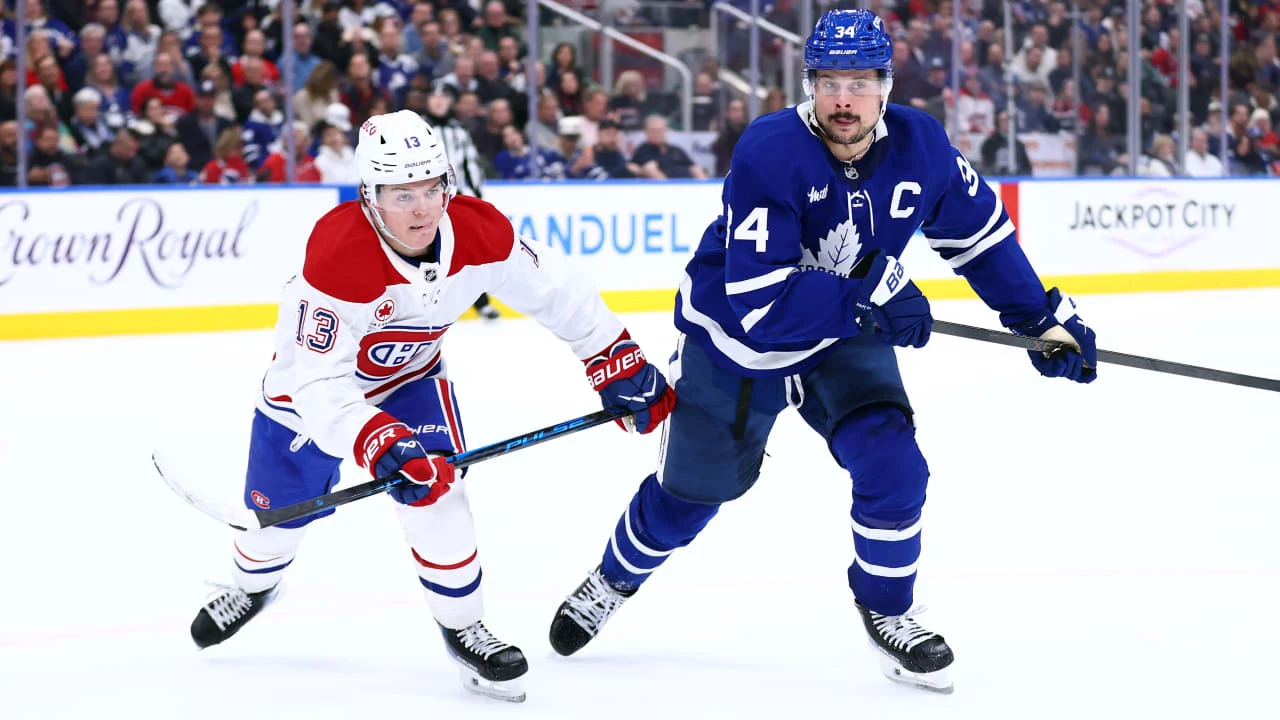
The 2026–27 NHL regular season has 84 games per team, with 42 designated home and 42 away. It began September 29, 2026, and ends April 10, 2027. The two new dates go to division opponents, so every division rivalry now gets four meetings. That gives a fan two simple ways to read a team’s schedule: count the extra division games, then check which buildings and broadcast windows they fall in. NHL schedule and matchup matrix
The expansion also changes comparisons across seasons. A familiar point total now comes from a different number of games, and a late rivalry matchup can move two teams in the same standings race. Here is how to put those changes to work when you look up your next game, make travel plans or check the playoff picture.
What changes in an 84-game NHL season
The regular season runs from September 29, 2026, through April 10, 2027. Each club plays eighty-four games, up from eighty-two. Both new games count in the standings and both are divisional matchups. One is designated home and one away. Multiply thirty-two clubs by eighty-four and divide by two because each game has two teams. That gives 1,344 league games, compared with 1,312 when the same number of clubs each plays eighty-two. The expansion puts thirty-two more regular-season games on the NHL calendar. NHL’s official schedule release · League schedule statistics
It is a longer regular season in games played, and the league starts in September. The NHL last used eighty-four games per club in 1992–93 and 1993–94. The schedule then used neutral-site dates in a different format, so those seasons are a historical comparison for length without telling a current season-ticket holder what is in this year’s ticket package. What makes the current change easy to spot is that the extra games use opponents from the same division. The league keeps the requirement that clubs see teams from the opposite conference at both ends of the home-and-away schedule.
The preseason uses a different count. The new agreement limits each club to four exhibitions during training camp and limits players with at least one hundred career NHL games to two exhibition appearances. For goalies, the veteran threshold includes games in which they dressed. The practical result for a fan is fewer exhibition slots for seeing most established players before the standings start to move. A September date can be preseason or regular season. Use the game’s stage in the listing instead of treating every visit to the arena as one of the eighty-four. Agreement sections on exhibitions and the regular season · Season schedule with stage filters
The earlier start is also why an October-only calendar can miss a team’s first result. Several clubs played their first regular-season game on September 29. Others began later, so a fan who only follows one club should also confirm its first home date. The league’s famous opening matchup and the first game in your building may be entirely different entries. Start by picking your team, then select the season stage and which rink you intend to visit.
How each team’s 84 games are distributed
The league divides the schedule into games in your team’s division, games in the other division of its conference and games against the opposite conference. For one club the totals are twenty-eight, twenty-four and thirty-two. The same categories apply to all thirty-two clubs. You can audit a team page by separating the opponents into those three groups and counting the home and away entries for each. A quick check against the league matrix gives you the number of home dates and the number of road trips to expect before you start comparing particular months. Official schedule matrix
Four dates with every division rival
Every team has seven division rivals. Two designated home and two designated away dates with each one give you fourteen of each. The older eighty-two-game matrix made room for only twenty-six division games. It had four games against five rivals and three against each of the remaining two. One of those shorter series included two home games and the other included two road games. The current format fills those two missing dates and gives each rivalry a complete home-and-away pair twice over. Previous season matrix
Washington and Pittsburgh make that easy to see. The Capitals hosted their division rival on October 7, go to Pittsburgh on January 18 and March 13, then close their home schedule against the Penguins on April 4. Compare the first home matchup with the last home matchup to look for the same deployment against the opposing center. On the road, watch how the opponent uses its last change after stoppages to get the line it wants. Having four meetings gives you samples in both buildings without assuming any one matchup is more important simply because it happens late. Washington’s schedule by game
How cross-division and interconference games fit
The other division in the same conference has eight clubs. Those opponents show up three times apiece. Four of them appear twice at home and once away, and four appear once at home and twice away. That division of dates gives twelve home and twelve road games. If you are looking for another visit by a same-conference team, check which group it falls into for the current season. It may have played its final visit even though you can still watch your club go to its building.
Each of the sixteen clubs in the opposite conference appears once at home and once away. Washington’s schedule has Colorado hosting the Capitals on December 12 and the Avalanche visiting Washington on January 16. These two games are the complete regular-season series between those clubs. The cross-conference bucket contributes sixteen home and sixteen away. Add that to fourteen of each in the division and twelve of each in the other division, and you get forty-two home and forty-two away. A complete calendar checks out both ways, by the types of opponents and by the location designation. League home and road split · Browse your team’s schedule
Key 2026–27 dates between opening night and the playoffs
The season opened September 29. The Hurricanes raised their championship banner before hosting Florida in the first game of ESPN’s U.S. tripleheader. The Rangers at Boston and Chicago at Vegas filled the later slots. The Canadiens and Maple Leafs played in Toronto that night on a separate Canadian national broadcast. A league-opening slate can have several broadcast windows in the same evening, so use the game listing before assuming that one network showing opening night also shows your team. Opening night from the official release
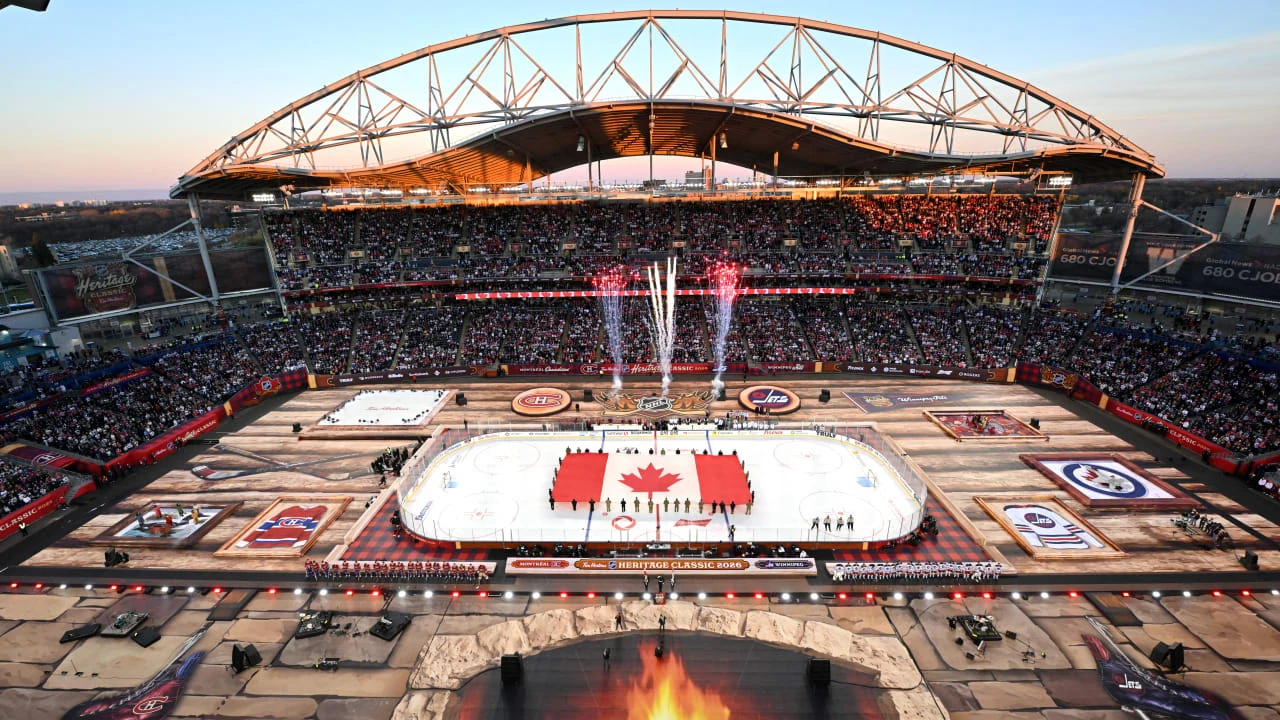
The Heritage Classic offered an early example of a special event in the same standings. On October 25, Montreal and Winnipeg played at Princess Auto Stadium, and the Canadiens won 2–1. The Jets were the designated hosts, even though their normal indoor building was not the venue. Two November games in Helsinki between Carolina and Seattle also counted in the regular-season totals. The remaining international dates take Ottawa and Chicago to Düsseldorf on December 18 and 20. The venue, puck-drop time and host designation each matter if you are making plans. Heritage Classic game summary · Upcoming NHL events
Colorado and Utah headline the December 31 Winter Classic at Rice-Eccles Stadium in Salt Lake City. The calendar then separates All-Star Weekend, February 5–6 at UBS Arena, from the February 20 Stadium Series game between Vegas and Dallas at AT&T Stadium in Arlington. All-Star events have their own competitive format and do not contribute to a team’s regular-season record. The outdoor rivalry games do. The games still on the horizon give you the option of watching in a different setting without having to remove them from your arithmetic when you check which dates remain.
March 1 is the scheduled trade deadline. The regular season concludes April 10 with all thirty-two teams in action, and the league calendar lists April 13 for the opening of the playoffs. The Stanley Cup Final will be on TNT Sports in the United States. That coverage announcement establishes the final round’s U.S. broadcaster. The eventual playoff matchups and start times need the postseason schedule itself. Bookmark the bracket page separately when comparing late-season dates. Official 2026–27 calendar · U.S. national broadcast release · Stanley Cup Playoffs schedule
How to read the standings in the longer season
The basic scoring system stays the same. A win is worth two points, a loss in overtime or a shootout is worth one, and a loss in regulation earns zero. What changes is the number of games in which a club can earn those points. A team now has a maximum of 168 points available, four more than in an eighty-two-game season. That changes how to read familiar round-number milestones across years. A one-hundred-point club over eighty-two games captured about sixty-one percent of its available points. On the same pace over eighty-four, it would take about 102 points. The pace comparison says how the seasons line up. The number of points needed for a playoff spot depends on the other teams. NHL team explanation of standings points
When your team has played fewer games than a rival, divide points earned by twice its games played. A forty-point club through thirty games has a .667 points percentage. Forty points through thirty-two games yields .625. Both have the same points already in the bank, and the first has more remaining games in which to add to the total. The league also lists fewer games played as its first ordering criterion at equal points. At equal games, regulation wins are the next test before regulation plus overtime wins. A shootout victory earns two standings points and differs from a regulation win in that comparison. Official standings tiebreakers
The added divisional dates give a team two more direct meetings with clubs it is competing against for the same three automatic division places. A regulation win adds two points to the winner and leaves that opponent without one. If the game reaches overtime, a division rival can take a point even in defeat. When the standings are close, notice which coach keeps his best scoring line out late in regulation and which team can defend without giving up the middle of the ice. The points involved are the same as for any regular-season game. The opponent is what makes the result change both sides of the race. NHL playoff qualification format
Keep an eye on both the division and the conference. The next two finishers in each conference outside the automatic division spots can qualify as wild cards. That gives games against the other division a clear purpose too. A team may need to pass a club across the conference instead of catching the third-place team in its own division. Use the current picture to see which teams occupy those positions, then compare remaining schedules by opponent. A calendar with two extra division dates offers new opportunities without establishing where the finish line for qualification will fall. Current division and wild-card picture
How to plan the next game, road trip or playoff watch
Pick the team and the season stage first. In the month-by-month schedule, regular season is the stage that should total eighty-four for one club when all months are included. Then choose home or away if it matters. A special event can still appear in the home selection under the designated host. Open each outdoor or international game to see the actual venue before looking for tickets. This is especially useful if you are planning around a visiting club and need to know whether your best chance to see it lies in an ordinary road game or an event outside either team’s usual building. Season filters
Check two clocks for travel. The site’s game dates and month boundaries stay Eastern, even when you choose another display time zone. The displayed puck drop can be changed to the time you need where you will watch. A team announcement also can update an original release. Washington’s later national broadcast notice moved its January 10 game at Anaheim from 8 p.m. Eastern to 3:30 p.m. Eastern, or 12:30 p.m. in Anaheim. That turns the same listing into a different travel day. If you plan around the initial calendar, rerun the date and venue check before making arrangements. Washington’s updated time announcement
For a handful of games, print or export the filtered list and leave yourself room to note schedule changes. A season subscription on the schedule page covers the season rather than only the dates in the current filter. Match the option to how you will use it. If you need television information, open the broadcast listing for that matchup. National coverage, a regional listing and a date with listings still pending require different checks. The displayed time is puck drop, so allow a different start for the studio show or pregame broadcast. U.S. television listings
If you are planning postseason viewing, put the opening date on the calendar and wait for your team’s confirmed opponent and series schedule before reserving anything that depends on a specific game. A team can play its eighty-fourth regular-season game on the same day as everyone else and still open its playoff series in a different building or television window. Check the standings first, the separate playoff page second and the specific game listing last. That sequence keeps your season calendar useful as the remaining games get shorter and the matchups become clearer. Playoff schedule
Comments (0)
Share a useful tip or ask a question about this guide. Keep it friendly and on topic. Comments are checked before they appear.
No comments yet. Be the first to join the conversation.
Join the conversation
Sign in with Google to leave a comment.