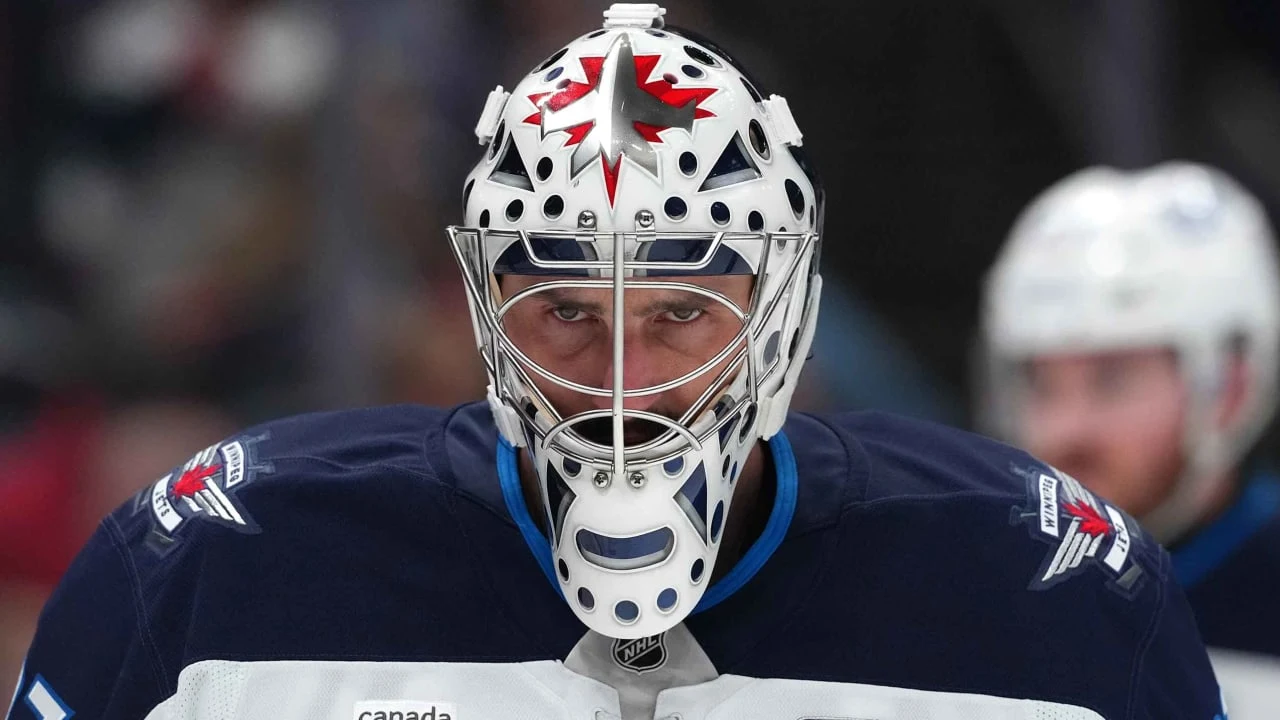
The latest completed deal in the NHL’s 2026–27 trade log, checked November 25, was Edmonton’s November 23 acquisition of Austin Roest from Nashville in exchange for James Stefan. Montreal’s bigger move for Dylan Larkin came one day earlier. Both appear in the same official log, which gives you a clean way to separate the newest move from the one getting the most attention. This tracker follows the major confirmed deals by club and shows where the players may next make a difference. NHL trade log
Trade requests, contract extensions and game-day changes can all bring a player’s name back into the news. Save the event you are tracking and the date attached to it. A goalie may change teams days before he starts, and a winger may extend a contract that has a whole season left to run. Sorting those timelines first gives you a better idea of what to expect the next time you watch.
The latest confirmed NHL trades
The league record covers the season’s transactions beginning at noon Eastern on July 1, 2026. As checked November 25, its newest listed trade sent forward Austin Roest from Nashville to Edmonton for forward James Stefan on November 23. Edmonton confirmed the exchange in its own announcement. That’s the test to apply to any claim that a trade happened today. Start with the league’s transaction date, then look for the team’s release or the corresponding roster move. News stories about completed transactions often appear after the date on the official record. Official NHL trade record · Edmonton’s announcement
- November 23 — Edmonton acquired Austin Roest. Nashville acquired James Stefan.
- November 22 — Montreal acquired Dylan Larkin and two picks. Detroit took back two players, the rights to a prospect and four picks.
- November 20 — The Rangers acquired Max Sasson. Vancouver received a 2029 fourth-round pick.
- November 16 — Minnesota acquired defenseman Jeremy Davies from Vegas for future considerations.
- November 15 — Chicago acquired Spencer Martin. The Rangers acquired Arvid Soderblom.
The list can answer two useful questions beyond who went where. The first is whether the move took place during this season’s transaction window. Select an earlier season separately if you are looking for the 2026 deadline or the months leading up to it. The second is what each club can do with the return. A conditional pick has a draft year and a trigger, while future considerations are listed without a specific player or selection in Minnesota’s entry. An acquired forward may already have a defined role in the organization’s development system even if his name never reaches that week’s NHL game sheet.
The shape of the exchange helps set expectations. Edmonton and Nashville changed two players’ organizations in a smaller swap. Montreal and Detroit changed the personnel at multiple levels and moved picks extending several years into the future. Those changes should be evaluated with different measures. For a depth swap, check the destination and roster assignment first. For a player headed straight into a top-six role, the first game deploys the player against a new opponent with new teammates. From there, a handful of line sheets can show whether the initial lineup persists.
Use the transaction date to record the deal and the schedule to find the next chance to see the player. Check the game roster before planning around a debut. A skater can be a member of the organization without dressing that evening. This applies particularly to minor-league moves, injuries, and players in transit between cities. The team directory leads to each club’s schedule, and the daily page lists the games that actually take place tonight. Team schedules · Today’s NHL games
Team-by-team look at the deals that changed lineups
The official ledger reaches all clubs. These cases answer a narrower question: how does a move create a visible change the next time you watch the team? A center between new wings, a goalie making his debut and a defenseman replacing a traded forward each affect the lineup in a different way. Track where the player actually starts, whether the coach preserves existing pairings and what the club has to replace down the lineup. League transaction list
Montreal and Detroit
Montreal added Dylan Larkin for immediate work at center. Detroit acquired Kirby Dach, Samuel Montembeault, Michael Hage’s signing rights and four draft picks. Montreal also took back two selections in the first transaction. The format of the return matters. Hage’s rights and protected first-round picks play out beyond the next schedule block, while Dach and Montembeault have NHL experience and different paths into Detroit’s lineup. This is a trade that can make sense for one club’s next game and still require several seasons to judge for the other. Canadiens trade announcement
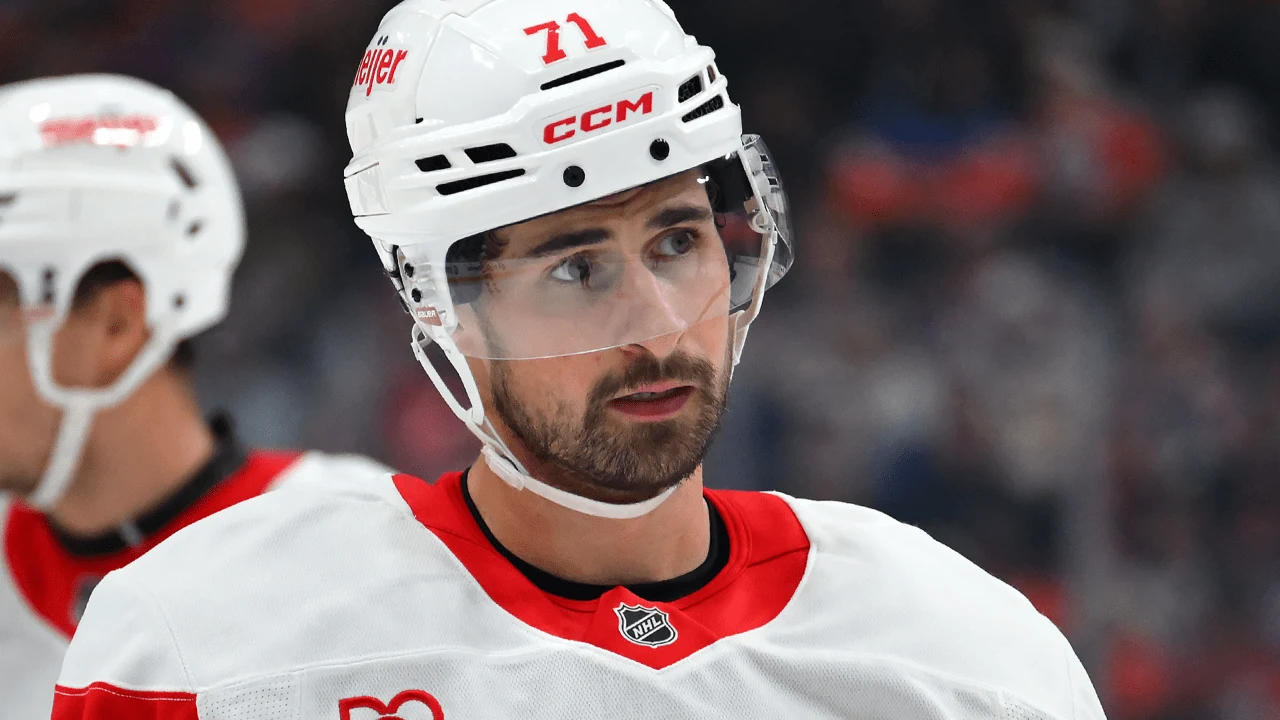
Larkin’s first game supplied a fast sign of his role. He assisted on Montreal’s only goal in a 2–1 loss to the Kings on November 23. A next-game check can build on that by looking for his faceoff responsibility and whether the same wingers work with him when Montreal needs a goal. For Detroit, look for where Dach lines up when he dresses and how the team divides starts when its goalies are available. The roles answer more than the number of assets traded. Montreal debut event summary
New Jersey and Winnipeg
The Devils acquired Connor Hellebuyck from the Jets on October 23. Winnipeg received forwards Dawson Mercer and Nick Bjugstad, goalie Nico Daws, the rights to forward Alexander Command, a second in 2029 and a seventh in 2027. The Devils took back a starter with a long NHL record. Winnipeg spread the return across the crease, its forward group and future assets. Those are distinct roles that won’t necessarily show up together on the same night. Devils official release
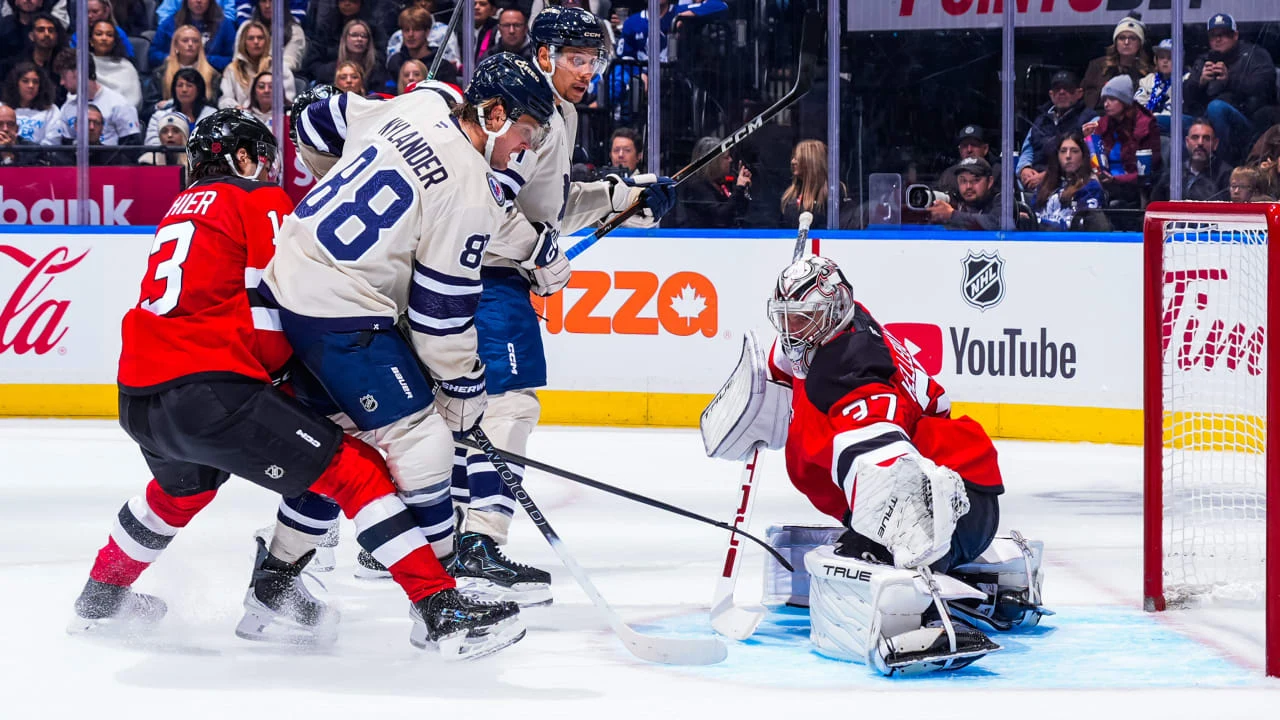
New Jersey won Hellebuyck’s debut in Dallas 5–1 on October 27. His first Devils shutout came on November 8 at Toronto, when he stopped twenty-three shots in a 4–0 win. Watch how the defense clears the first rebound and whether the forwards give the goalie a clear view of point shots. A four-goal cushion also changes what the defending team can concede late in the game. The score and saves provide landmarks for the replay. To assess New Jersey’s changes around its new goalie, add starts with a closer score or heavier traffic. Dallas debut · Toronto shutout recap
Toronto, the Rangers and other recent moves
Toronto acquired Kirill Marchenko, Miles Wood and Elvis Merzlikins from Columbus on September 28. The Blue Jackets got Matthew Knies, Steven Lorentz, Emil Andrae and a 2027 second-round pick. Record the lineup difference by position. Marchenko affects how Toronto fills a wing slot, while Merzlikins gives the club a different option in goal. A forward acquisition may change sheltered minutes or power-play usage well down the depth chart even if his own ice time looks familiar. Toronto and Columbus deal
The Rangers sent Vincent Trocheck to Utah in July and brought back Sean Durzi, prospect Cole Beaudoin and a 2027 third. They added Sasson in November. Boston’s summer deal for Will Borgen and Minnesota’s acquisition of Blake Coleman and Olli Maatta illustrate another distinction. A team can make a consequential change to its blue line without a recent rumor name appearing in a completed deal. Check power-play and penalty-kill usage before judging an incoming player by points alone. Trocheck trade coverage · Boston, Minnesota and other club transactions
The latest signings and extensions
An NHL signing can explain a club’s longer plan without adding anyone to tonight’s roster. Toronto’s acquisition of Kirill Marchenko on September 28 and its announcement of his six-year extension on September 29 belong on separate lines. Columbus’s club release, which covers the trade, described the draft pick headed its way as conditional. Toronto’s extension notice covered the length of the new agreement. NHL.com reported that the extension starts the following season, so neither the traded assets nor the future contract is a good shortcut for the other. Columbus trade terms · Toronto extension release · NHL report on the start season
Alex Newhook’s agreement is an example of an extension that kept a player in the same organization. Montreal announced the deal on September 15, for four seasons beginning in 2027–28 and finishing in 2030–31, at an average of $5.55 million a year. The date it was agreed and the date it begins answer separate questions. When you compare teams’ spending for the current season, the old contract still matters. When you ask whom the Canadiens have kept under contract for several more seasons, the extension matters. Canadiens contract announcement
For a player signing as a free agent, write down the club he signed with, the contract length and the first season the new deal applies. Compare the notice against the offseason player’s free-agent status only when relevant to the story. An already signed player changing clubs in a trade, a club extending its own player and a free agent joining a club each leave a different paper trail. These items answer why one team’s payroll changes or why a lineup slot becomes available, even when they show up under one general transactions menu.
The NHL’s 2026 free-agent tracker describes the league’s categories and lists summer signings by team. Its editor’s note defines a preseason stopping point. It is useful for answering how a player arrived during the offseason, and it requires a different source when you are looking for an in-season update. A club’s personnel page can cover the later contract, but it can also list player recalls, assignments and staffing announcements. Open the individual entry before entering it as a signing. NHL offseason free-agent tracker · Example of a club personnel feed
One useful habit is to save the date the term actually starts. That date keeps an extension from being mistaken for an immediate roster event. If the club releases only the term, quote that term and leave the dollars blank until they are on the record from a source you can identify. Future salary and the value of the assets a team exchanged are both real considerations, and each is easier to evaluate with its own dated record.
How to interpret a trade rumor and follow the next game
Start by writing down the narrowest claim you can actually confirm. In August, Winnipeg’s general manager acknowledged Connor Hellebuyck’s desire for a change. In September, the club reported its response when he didn’t report to camp. Those were real developments before the October transaction. The earlier statements did not establish which team would acquire him or what the return would be. New Jersey’s release supplied those details on October 23. That sequence is useful whenever a search headline says a player is being discussed and the surrounding coverage makes it sound as though he has a new team. Winnipeg’s August statement · September update · Completed October trade
Here is a practical distinction for search results about teams such as the Bruins, Devils, Canadiens, Wild or Maple Leafs. When a story cites a named general manager saying the club is considering several options, the confirmed information is the statement about options. The source has told you less than a report of a specific team-to-team negotiation and less than a completed trade. A recycled headline about a player who already changed teams requires another check. Look at the season, publication date and team named on the current official roster before sharing the headline or assigning it a date in a tracker.
A useful tracker entry should answer who, when, and how certain. Mark a completed move with its league date and link the club statement. If the player publicly asks for a trade, write that the request exists and stop there unless there is on-record evidence for a destination. When a second story tells you what a team might need, treat that as opinion about its roster. Link the need to a game you can observe. A team that repeatedly has to move a winger to center, for example, gives viewers a specific thing to look for in its next lineup. It does not identify a particular player the team will acquire.
The next game is its own check. NHL.com publishes projected forward lines, defense pairs, goalies and injury status by game. A final event report shows who really appeared and how much they played. Vancouver’s November 25 Detroit preview still described both incoming veterans as awaiting their Red Wings debuts and identified Montembeault as being on injured reserve. If a player is listed in the trade era but absent from the actual game, you still have to check his availability before explaining whether coaches were free to dress him. NHL projected lines and injury status · Vancouver’s Detroit preview
Open the team schedule, pick the first game that actually features the new player and check the local broadcast before you settle in. For a defenseman, watch partner assignments and the first pass after a retrieval. For a forward, compare linemates before and after the first intermission and see who gets an extra shift when the team needs a goal. A newly acquired goalie’s starts and the team’s recovery days help reveal his workload. These are better anchors for a team-by-team tracker than speculative grades posted before the player gets on the ice. Browse team schedules · Find U.S. broadcasts · Check the playoff race

Comments (0)
Share a useful tip or ask a question about this guide. Keep it friendly and on topic. Comments are checked before they appear.
No comments yet. Be the first to join the conversation.
Join the conversation
Sign in with Google to leave a comment.