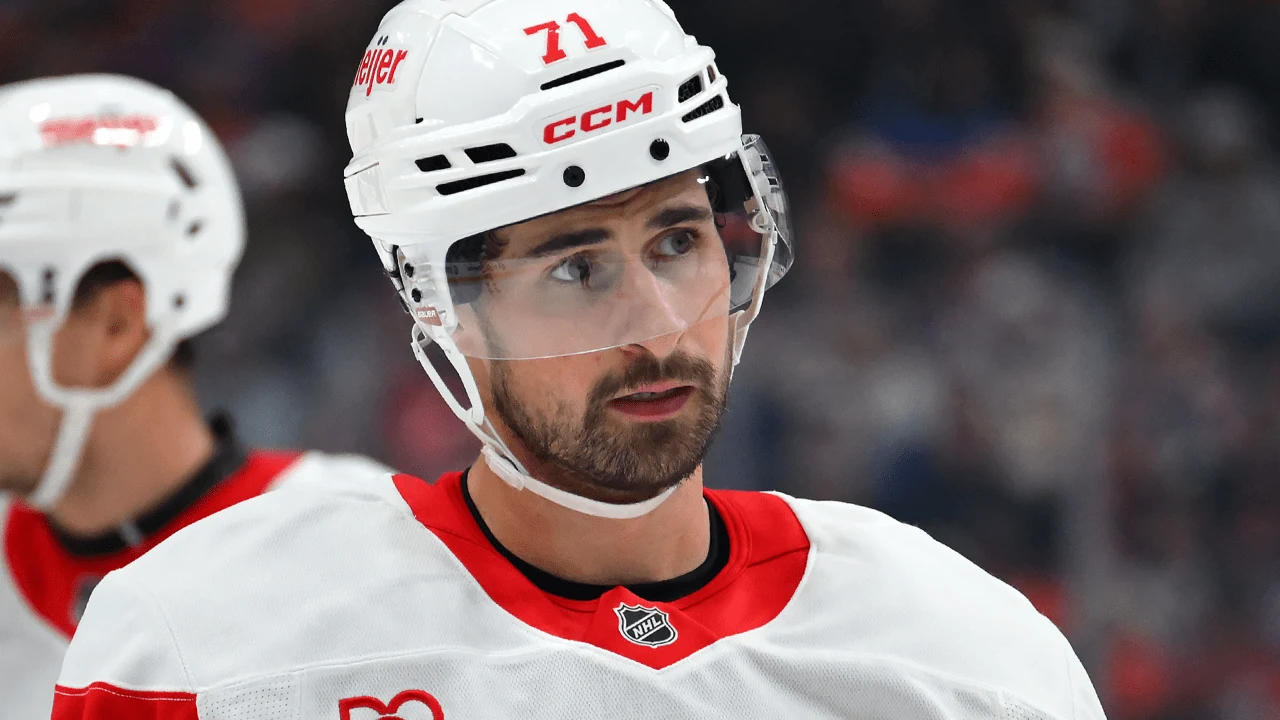
The Montreal Canadiens acquired Dylan Larkin and two draft picks from the Detroit Red Wings on November 22, 2026. Detroit received Kirby Dach, Samuel Montembeault, Michael Hage’s rights and four selections, including Montreal’s top-ten-protected first-rounders in 2027 and 2029. Each protected pick can become an unprotected first-rounder one year later. Montreal then went back to the trade market and moved one of the picks it had just acquired. NHL’s official transaction record
Larkin made his Montreal debut the next night, assisting on Alex Newhook’s goal against the Kings. That game offers a first look at how the Canadiens can use him. The pieces Detroit received call for a longer view, starting with the exact route each pick can take and the players who can help the club this season.
What the Canadiens and Red Wings exchanged
Read the November 22, 2026, transaction from both sides and leave a separate line in the ledger for the Anaheim deal that followed. Montreal acquired center Dylan Larkin, Detroit’s third-round pick in 2027 and Detroit’s second-round pick in 2028. Detroit acquired forward Kirby Dach, goalie Samuel Montembeault, the signing rights to center prospect Michael Hage, two conditional first-round picks, a second in 2027 and a fourth in 2028. The Canadiens published their announcement on November 23 and described the deal as having happened the previous day. The distinction explains why coverage carries both dates. NHL Trade Tracker · Canadiens announcement
Those two picks coming with Larkin matter when comparing this trade with another bid for a top-six center. Counting four picks going out tells only half the story. Montreal brought back two selections and later changed the year of one. Detroit, meanwhile, acquired a mix of draft capital and players whose value will become clearer on different schedules. The deal gives you separate questions to ask about each selection and each roster spot over the coming months.
The two conditional first-round picks
Both protections use the same test. The Red Wings get Montreal’s own 2027 first if it lands outside the top ten after the lottery. If the Canadiens draw a top-ten selection, they keep that pick and send Detroit their own unprotected first-rounder in 2028. Apply the same logic to the separately protected 2029 first. A top-ten result in 2029 moves the obligation to Montreal’s unprotected 2030 first instead. Detroit spelled out the terms in its announcement. Red Wings release with the formal conditions
Imagine Montreal winds up picking tenth in 2027. It would keep that selection and owe its next first-rounder. If it picks eleventh, Detroit would get that selection under the original terms. The fallback exposes Detroit to another year of waiting and gives it access to the full range of Montreal’s draft position in that later year. The first condition can settle without deciding the second. Check the lottery result for the specific year before treating either slot as known.
Why a second deal changed Montreal's list of picks
Later that evening, Montreal traded the 2028 second-rounder it had just acquired to Anaheim. In exchange, it received another Detroit selection, a second in 2027 that Anaheim already held. That is a separate move from the Larkin deal. The original ledger still shows Larkin with the 2028 second and 2027 third coming to Montreal, while an updated Montreal pick inventory shows the 2027 second coming from the Ducks. NHL.com recap of both moves
Two second-rounders in 2027 show up in summaries, so it helps to name their original holder and their destination each time. Montreal sent a 2027 second to Detroit in the first transaction. It gained the Detroit-origin 2027 second from Anaheim in the second. The two followed different paths. A draft-year label by itself offers little help if you want to know what a club can trade again, or which team will be on the clock when the pick eventually comes up.
What Detroit can do with three different kinds of return
Shawn Horcoff, Detroit’s interim general manager, put Michael Hage at the center of the return when he spoke after the trade. It makes sense to assess the package on three different clocks. The pick inventory gives the front office options as soon as it starts another negotiation. Dach is an NHL forward the coaches can evaluate in their lineup. Montembeault’s contribution in net depends on his availability, and Hage’s development remains on a college timetable. Horcoff’s comments on the return
Keeping a pick until draft day is one way to realize its value. Including it in a trade for a different player is another. That distinction matters to fans who are looking for a center on the ice right away. A club can have a valuable package and still need to replace a departing player’s shifts in its next game. Detroit’s young forwards and current lines are the immediate story. The eventual choices attached to this deal are the longer one.
Michael Hage is the long-term piece
Montreal drafted Hage twenty-first overall in 2024, and Detroit acquired his rights while he was still unsigned. Michigan’s cumulative 2026–27 statistics showed five goals and twenty-one assists through thirteen games when checked on November 25. His five-point game at Ohio State, a Michigan overtime win, provides a useful starting point if you want to see how he makes teammates more dangerous. Watch where he gets the puck before his first move and where he finds the next player. The resulting assist count captures the outcome without explaining how much space and time he made for himself. Michigan season statistics · Ohio State game recap
College scoring is evidence that he is producing in the role he currently plays. NHL defenders close lanes sooner, and the club that holds his rights still needs a contract and a development plan. His next meaningful milestones are decisions about where he plays, how he uses his size and vision against tougher coverage, and whether he eventually earns NHL minutes at center. The deal makes those decisions Detroit’s to handle.
Kirby Dach and Sam Montembeault operate on different timelines
Dach had eight points in twenty-two games for Montreal at the time of the deal. Detroit can see whether the former third overall pick works best carrying the puck through the middle or supporting a line from the wing. Watch who takes the faceoff with him when Detroit posts its lines, then check who actually advances the puck on exits. On a shift after a change, a player can perform a different job from the one his lineup label suggests. Detroit’s transaction and player records
Montembeault had yet to appear in the 2026–27 NHL season at the time of the transaction after an undisclosed injury. His save percentages in his previous two seasons with Montreal were .902 in sixty-two games and .872 in twenty-five. The different workloads give a better picture of his recent role than a single percentage. Follow the club’s reports for availability and wait for starts to see where he fits. The acquisition supplies another goaltending option once he is ready to play. NHL.com’s injury and contract context
How Montreal used Larkin in his first game
Montreal put its new center in the lineup against Los Angeles at Bell Centre on November 23. Larkin wore No. 89, played nineteen minutes and fifty-seven seconds, and had three shots on goal. He won ten of seventeen faceoffs. The Kings won 2–1 despite Montreal’s 30–22 shots-on-goal advantage. The effort gave Montreal a full game of tape on how he handled draws, where his line began shifts, and when the coaches went back to him. NHL event summary
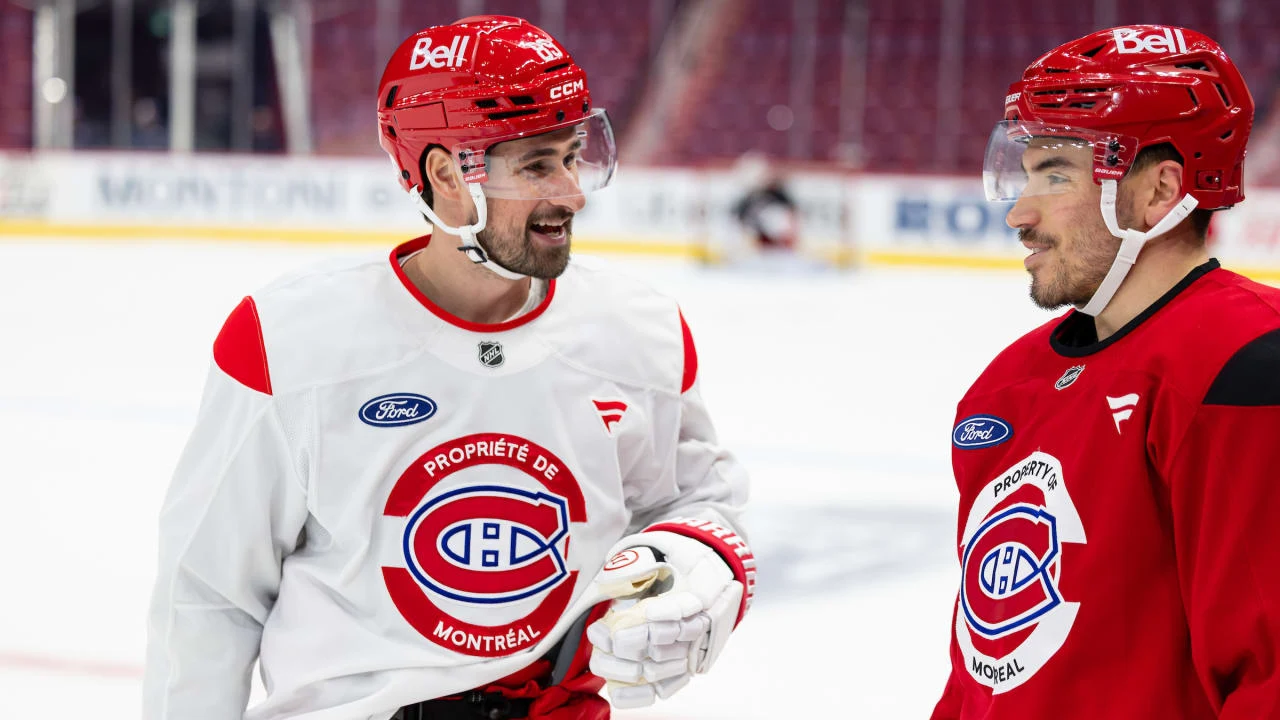
The scoring sequence gives readers a useful stretch to pull up. At 6:58 of the second period, Larkin won a defensive-zone draw against Quinton Byfield. The event log lists Alex Newhook and Alexandre Texier alongside him. Newhook scored at 7:28, with Texier receiving the first assist and Larkin the second. The official recap describes Texier finding Newhook with a pass from behind the goal line. On the replay, follow the puck after it gets low and watch which Montreal player works into shooting position as the Kings turn. The official events flag the lineup and timing. The clip supplies the path in between. Official play-by-play · Game recap and clips
Look at the draw and the goal as separate checkpoints. Thirty seconds of game time is long enough for an exit, a turnover or a change behind the play. The event sheet does not chart every touch. A scorer’s secondary assist gives the play proper credit, while the full shift tells you how the three forwards supported one another. That is a better test of developing chemistry than a single entry in the points column.
What the debut can tell you about the power play
Larkin played 3:06 on the power play and 16:51 at even strength. Caufield also logged 3:06 with a man advantage. Lane Hutson played 3:17 in that situation. The identical forward totals give you a reason to check when they worked together, and the shift overlap would establish how much of that time was shared. Montreal also pulled its goalie while on a late power play, creating a six-on-four. On the next broadcast, note who handles the entry at five-on-four and who begins a possession on the half wall after a draw. Late extra-attacker shifts can offer a different group and a different assignment. Game situation and time on ice
The assist on Newhook’s goal came at even strength. To track a special-teams trend, follow Larkin through several ordinary first-unit starts. Ask who retrieves a cleared puck and whether he starts the next rush with speed or hands the entry to a teammate. Those responsibilities indicate how the coaches use him even when a power play ends without a shot. His first game provides a reference for those later observations.
What to watch next in Montreal and Detroit
Montreal left for a western trip after practicing on November 24. The first date on the trip was the Avalanche at Ball Arena on Wednesday, November 25, at 9:30 p.m. Eastern, followed by Las Vegas on Saturday and Salt Lake City on Monday. A road game provides a different test of Larkin’s role. The home team generally has the last change after a stoppage, so check which opponents come over the boards after his line enters. Watch how often Montreal can reset with the puck when its second group starts away from the offensive zone. A tough opposition shift still provides something to learn if the line gets out of its end cleanly. Montreal’s November 24 practice and trip preview · Canadiens schedule
Start with the faceoff and follow the center through the next two passes. If Larkin wins it back, where does he move while his defenseman decides how to exit? If his line loses it, count how many puck touches Montreal needs before it can move through neutral ice. Those are repeatable questions across opponents. Look for the identity of his wingers and the defense pair, too. A successful carry can happen because a teammate pinned the forechecker or offered a short pass, and the lineup is rarely identical shift after shift. Use several games to see which assignments survive a change of building or a different game state.
Detroit’s next scheduled home date was against Vancouver on November 25. In its preview, Vancouver listed Dach and Montembeault as having yet to make their Detroit debuts and gave Montembeault’s status as injured reserve. The season schedule establishes the game, while the game-day lineup establishes who dressed. Check the latter before assigning meaning to a new player’s absence. If Dach is in the lineup, track which linemate makes the first support pass on breakouts and whether Dach takes draws on both sides of the ice. If he appears later in the week instead, carry that same viewing question to his first game. Vancouver’s game preview · Red Wings schedule
It will take longer to assess what changed in each organization. NHL.com reported that Larkin had five seasons remaining at the time of the trade on a contract averaging $8.7 million annually. His 649 regular-season points for Detroit came over 818 games. Those two frames are useful together. The Detroit points establish the scale of the departing role, and the contract tells you that Montreal planned for more than an immediate lineup patch. Early scoring will fluctuate. Starts after defensive-zone losses, second shifts after power plays and minutes in tight third periods are places to see whether those teams trust the line to absorb more work. League account of Larkin’s tenure and contract
Keep a dated checklist through the rest of the season. On Montreal’s side, record whether Larkin keeps a regular place with the same wingers and how his special-teams minutes change. On Detroit’s side, track Dach’s first few starts by position and Montembeault’s first appearances when available. Hage’s college season has a separate clock, and the conditional picks have their own lottery dates. If a club later trades one of those picks, follow the official ledger again. The playoff race can help explain why Montreal wants immediate center depth and why Detroit needs flexibility, while each individual asset still needs to be evaluated on its own timeline. Current playoff picture and wild-card positions

Comments (0)
Share a useful tip or ask a question about this guide. Keep it friendly and on topic. Comments are checked before they appear.
No comments yet. Be the first to join the conversation.
Join the conversation
Sign in with Google to leave a comment.